
The U.S. did not enter a new federal government shutdown on November 13. Its air-traffic system experienced a rare nationwide ground stop after telecommunications and radar feeds became unstable. On November 15, the FAA published the clearest public technical account so far: unusual connection traffic overwhelmed aging network equipment during a routine change.
What readers should know
- The FAA says the November 13 ground stop began around 3:30 p.m. Eastern; national departures resumed after stability checks at 8:15 p.m. Eastern.
- Data was flooding the FAA Telecommunications Infrastructure network at about 1,000 connection attempts every four to five seconds, according to the agency.
- The FAA says there is currently no indication of a cyberattack. Investigators are still examining the precise root cause.
A ground stop is not a government shutdown
A nationwide ground stop prevents aircraft from departing while controllers and aviation operators stabilize safety-critical systems. It is not the same thing as Congress allowing federal funding to expire. The November 13 event was a technical aviation emergency; aircraft already airborne were safely managed and landed.
The distinction matters when headlines use the word “shutdown.” Confusing a grounded airline network with a shutdown of federal agencies misleads travelers about both the cause and the remedy. The FAA says flight safety protocols remained in place throughout the incident.
What the new FAA account reveals
In its November 15 question-and-answer publication, the FAA described bursts of connection traffic flooding its legacy FAA Telecommunications Infrastructure network—roughly 1,000 attempts per four to five seconds. The agency said instability reached 17 of the 22 Air Route Traffic Control Centers and some approach-control facilities.
Two locations emerged as possible sources: a radar site near Amarillo, Texas, and a radio communications site at El Dorado, Arkansas. Network contractor L3Harris had been performing work at the El Dorado site, including a new router. The provider isolated both locations and the system stabilized. That sequence is not proof that a specific employee, part or outside actor caused the problem.
Why the FAA waited before lifting the stop
Not every radio frequency or radar feed failed. The FAA says some remained reliable and controllers used established procedures to manage aircraft. Given uncertainty about data quality, officials paused departures while isolating the problem and demonstrating that the system was stable enough to resume operations.
The ground stop was lifted by 8:15 p.m. Eastern on November 13, around four hours and forty-five minutes after the onset described by the FAA. Lifting the stop did not instantly restore airline networks: planes and crews were out of position, and cancellations cascaded into the weekend.
Flight totals require careful language
The FAA reported approximately 12,462 canceled flights on November 13, including 9,082 associated with major airlines. The agency explicitly cautioned that not every cancellation was directly caused by the ground stop. That distinction is important: it would be inaccurate to put the entire total on a single router.
Travelers should check the specific airline and airport rather than interpreting a national reopening as a promise that their itinerary is unaffected. A stabilized federal system can coexist with airport congestion and crew rotations that need time to recover.
Was it a cyberattack or an AI failure?
The FAA says available evidence gives no indication of a cyberattack or another outside malicious actor. The agency has not attributed this failure to artificial intelligence. Online attempts to connect unrelated technology incidents into a single conspiracy are not supported by the public evidence.
An investigation can still evolve, and the FAA says it continues working with L3Harris to determine how to prevent a recurrence. A lack of evidence for an attack is not an assertion that investigators have finished every inquiry.
The preventive changes—and the question that remains
The agency says it disabled the originating routers’ problematic functionality and took the same precaution on about 60 similar routers. Officials also said maintenance timing and procedures will be reviewed after a routine remote-site replacement had unexpected nationwide consequences.
The engineering lesson is failure isolation. Centralized infrastructure needs carefully bounded changes, monitoring that identifies broadcast storms or repeated connection attempts, rapid rollback, and contingency operations designed for partial—not only total—failure. This is original SJK systems analysis, not a finding about legal fault.
Editorial method: Current findings are attributed to the sources below. A preliminary explanation is not a final investigative conclusion; projections, allegations and buying advice are explicitly distinguished from established events.
Sources & further reading
Reporting as of November 15, 2026. Source statements, industry forecasts and independent analysis are distinguished in the article. Photo credits are below.
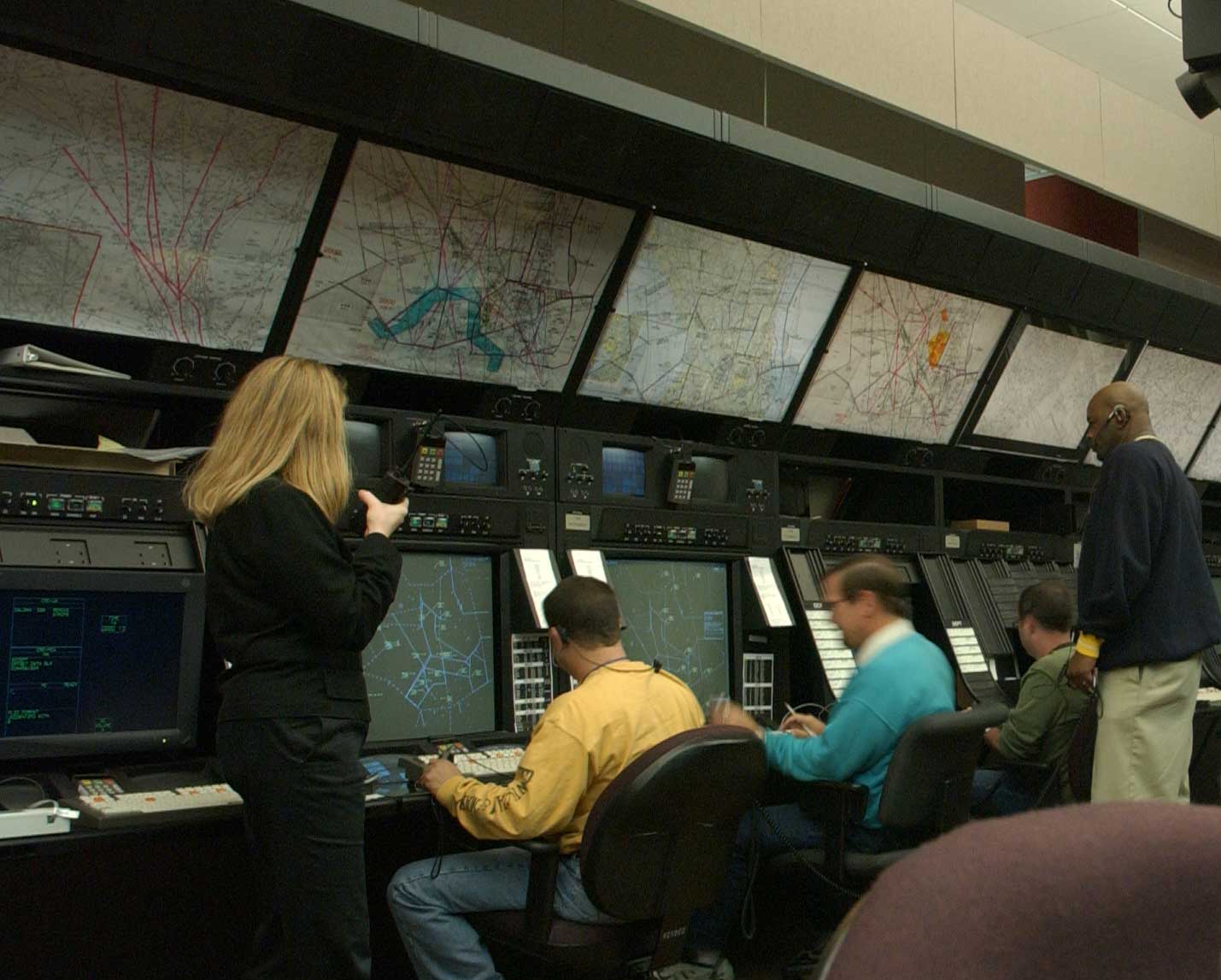
Photograph: FAA / U.S. Government archival photograph, public domain. Original photograph, attribution and reuse terms. Actual FAA controllers working at the Washington Air Route Traffic Control Center; an archival photograph, not the November 13 event.
 CLOUD / SERVICE HEALTHMicrosoft 365 Is Restored. Here’s What the Outlook Outage Actually Broke.
 ENTERPRISE / RESILIENCEThe Week Networks Failed
 BUILD LAB / BUYING GUIDEAnother RAM or SSD Price Hike? A Smarter Buying Plan for 2027.