
In one week, a nationwide aviation ground stop and a major Microsoft 365 outage reminded the public that sophisticated systems can be fragile when an upgrade exposes an unexpected dependency. The events were separate; officials have provided no evidence connecting them. What connects them is a broader engineering question: how do we modernize critical infrastructure while millions of people still depend on it?
What readers should know
- The FAA described a burst of connection traffic destabilizing its legacy telecommunications network after work at remote sites.
- Microsoft described a latent defect exposed during network changes, leading to queued requests and depleted connection capacity.
- These are different root-cause investigations, not evidence of one coordinated attack. The shared lessons are SJK systems analysis.
Two incidents, not one conspiracy
The FAA halted U.S. flight departures on November 13 after air-traffic-control communications and radar feeds became unstable. Microsoft had separately been recovering from disrupted access to Outlook and other Microsoft 365 services, with public restoration confirmed later.
Timing alone does not imply a common perpetrator, shared equipment or coordinated outage. The FAA says it has no indication of a cyberattack; Microsoft described its incident as technical. Public evidence must guide both stories.
The engineering common denominator: changes in production
A change may work in a test laboratory and fail in production when unexpected traffic patterns, hidden dependencies or aging equipment interact. The FAA’s description of repeated connection attempts and Microsoft’s description of queue saturation both show how a relatively bounded trigger can overwhelm a larger service.
But the systems are different. Aviation communications operate under specialized safety procedures; cloud email is a large distributed software service. Lessons can be compared without pretending the incidents were technically identical.
Know the blast radius before touching anything
For an organization, start with a documented inventory of dependencies: identity, DNS, internet access, email, backups, physical access and vendor services. Identify who has authority to approve a maintenance change, how it can be stopped and how success will be measured.
Use staged deployment and explicit stop conditions where possible. A network change should include thresholds for unexpected connection rates, latency, error rates and queue depth. These are general best practices, not a published account of the exact FAA or Microsoft configurations.
Practice a partial-outage response
A complete failure is easy to recognize. A partial failure is harder: some users succeed, others cannot sign in; some radar feeds work, others become unreliable. Write runbooks for degraded service, communications and manual workarounds rather than preparing only for total outages.
Keep a separate emergency contact channel that does not depend on the same identity or messaging provider. Test whether the team can reach customers, dispatch technicians, retrieve essential records and communicate honest status updates without its normal software.
What small businesses can do this week
Create a short contact tree, export a secure list of essential customer and vendor phone numbers, verify offline access to key work documents and test restoration from backup. Agree on who posts customer updates and when those updates will be revised.
Record incidents as facts, times, symptoms and actions—not theories about causes. A technician who can produce a clear incident timeline will usually resolve customer confusion faster than one who immediately reinstalls software.
The price of resilience
Redundancy, validation and spare capacity cost money. But lost appointments, unavailable records, inaccessible aircraft systems and prolonged customer confusion cost money and trust too. Not every small business needs a secondary cloud platform; every business benefits from a realistic failure plan.
SJK’s practical conclusion is not that every technology company has failed. It is that essential technology must be operated with the assumption that a maintenance change can fail in surprising ways.
Editorial method: Current findings are attributed to the sources below. A preliminary explanation is not a final investigative conclusion; projections, allegations and buying advice are explicitly distinguished from established events.
Sources & further reading
Reporting as of November 15, 2026. Source statements, industry forecasts and independent analysis are distinguished in the article. Photo credits are below.
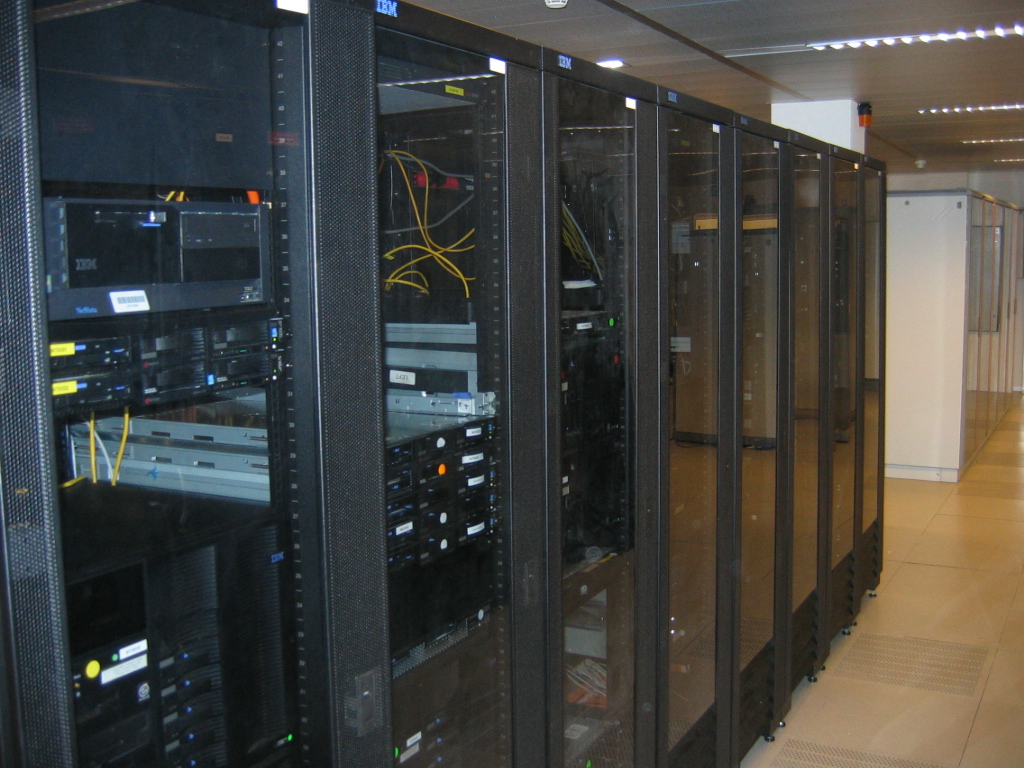
Photograph: Wilweterings / Wikimedia Commons, public domain. Original photograph, attribution and reuse terms. Genuine archival computer-server racks in a datacenter, used as an infrastructure illustration; not a photo of either 2026 outage.
 INFRASTRUCTURE / AVIATIONWhat Really Shut Down U.S. Flights: The FAA’s November 13 Network Failure
 CLOUD / SERVICE HEALTHMicrosoft 365 Is Restored. Here’s What the Outlook Outage Actually Broke.
 BUILD LAB / BUYING GUIDEAnother RAM or SSD Price Hike? A Smarter Buying Plan for 2027.