
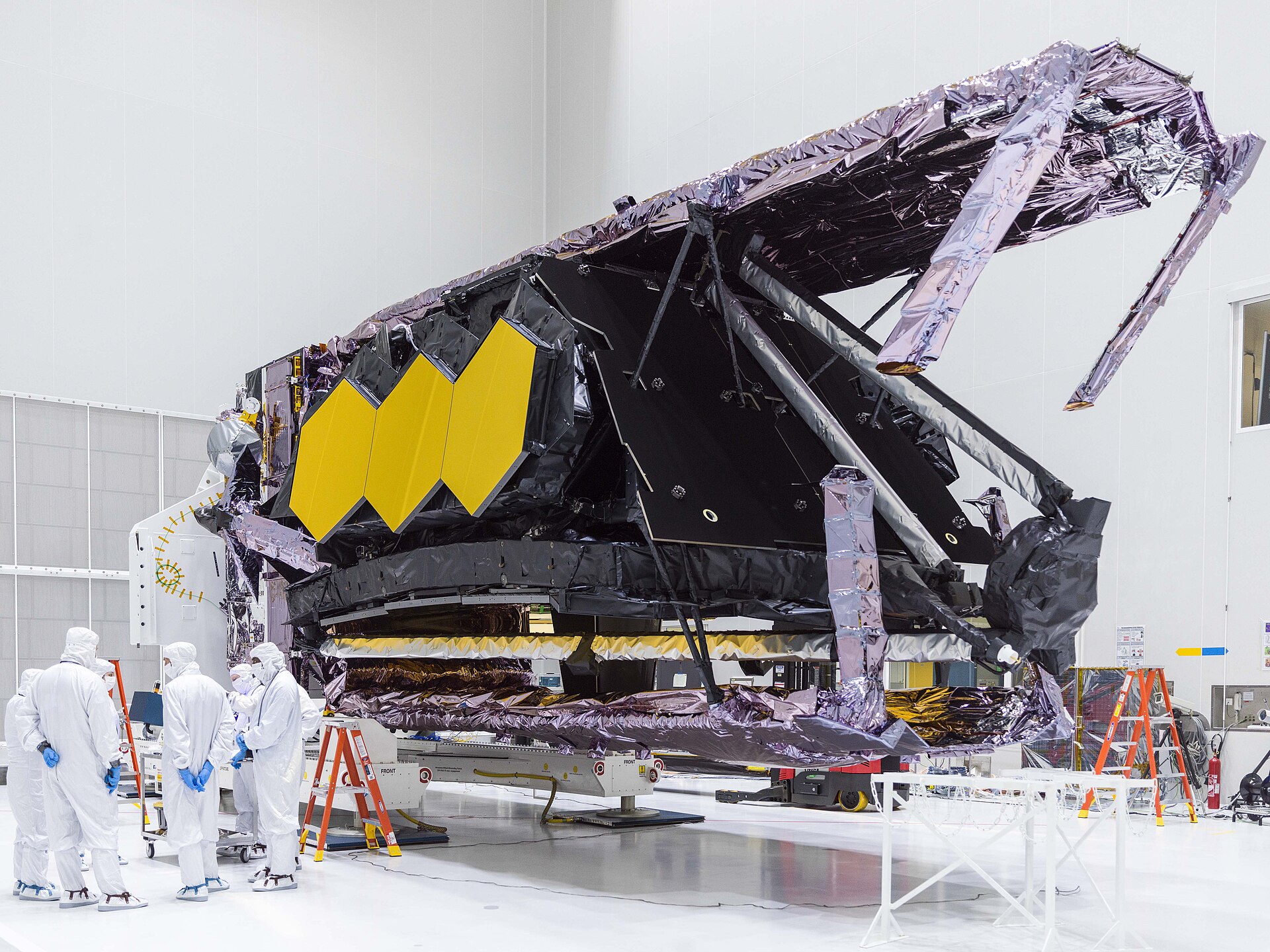
NASA’s next window into the universe may not look like a sharper version of the James Webb Space Telescope. PRIMA is being developed to detect far-infrared light, where cold dust, gas and chemical signals reveal processes that other telescopes can struggle to measure. It is not flying yet, and 2033 is a target—not a promise. Its scientific questions are nevertheless extraordinary: how do stars, galaxies and planetary ingredients take shape?
What readers should know
- NASA selected PRIMA to advance to Phase B preliminary design in September 2026, not to immediate launch or completed deployment.
- NASA’s public schedule targets a 2033 launch and a five-year mission if the project passes further review.
- The observatory will study far-infrared radiation to investigate dust, planet formation, galaxy evolution and the distribution of water-related chemistry.
Why Webb cannot answer every infrared question
The James Webb Space Telescope observes in near- and mid-infrared wavelengths. Those observations have transformed astronomy. But the much longer far-infrared wavelengths trace other processes involving very cold material, dust clouds and molecular emission that require different instruments and extremely sensitive detectors.
PRIMA is designed to complement existing observatories, not replace Webb. Some of the universe’s most important structures are hidden by dust or emit strongly at wavelengths that are otherwise difficult to observe with the necessary sensitivity.
A mission that is still being designed
On September 23, NASA announced that PRIMA, the Probe far-Infrared Mission for Astrophysics, was advancing to Phase B. That means preliminary mission design and technology development. A future confirmation review will determine whether it can progress to the implementation phase.
NASA describes a telescope about 5.9 feet across, a cost cap of up to $1.2 billion excluding certain costs if confirmed, and a targeted 2033 launch. Those figures are planning parameters—not proof that every milestone has already been completed.
The connection to the water we know on Earth
Water chemistry begins in environments far removed from an ocean or a planet’s surface. Scientists study water-related molecules and signatures within regions where stars and planets form, tracking how chemicals move through gas, dust and young planetary systems.
PRIMA’s far-infrared observations could help scientists connect those signatures across stages of cosmic history. It will not produce a single image that literally shows “Earth’s water being born,” and no discovery should be announced before instruments collect and researchers verify evidence.
Cold dust, star formation and black holes
Observing the cold universe can reveal where stars form inside dust-rich galaxies, how heavy elements accumulate and how material moves between galaxies and the massive black holes at their centers. Different wavelengths are not simply aesthetic choices: they let researchers ask different physical questions.
PRIMA’s planned surveys may therefore complement the detailed view from Webb and the radio measurements of facilities such as ALMA. The goal is a more complete physical picture rather than one telescope supposedly winning over the others.
What has to work before launch
Far-infrared astronomy requires sensitive instruments, careful thermal design, reliable spacecraft operations and extensive calibration. NASA’s international team includes partners and research centers contributing hardware, science processing and mission operations.
Technology milestones will be subject to cost, schedule and science reviews. As of November 2026 the mission remains in development; visualizations showing PRIMA in space are renderings of a proposed spacecraft, not photos of a deployed observatory.
Why this belongs in the future of technology
This is a story about sensors, advanced cooling, signal processing, space communications and long-duration engineering as much as it is about distant galaxies. The same fundamental lesson appears in aerospace and medicine: the quality of data depends on the instrument that measures it.
For SJK readers, PRIMA is a reminder that the next frontier may be learning to observe something that has been invisible—not inventing a fictional shortcut to another world.
Editorial method: Current findings are attributed to the sources below. A preliminary explanation is not a final investigative conclusion; projections, allegations and buying advice are explicitly distinguished from established events.
Sources & further reading
Reporting as of November 15, 2026. Source statements, industry forecasts and independent analysis are distinguished in the article. Photo credits are below.
Cover photograph: Photograph: NASA / Chris Gunn, public domain. James Webb Space Telescope in the 2021 cleanroom; NOT the future PRIMA observatory.
 INFRASTRUCTURE / AVIATIONWhat Really Shut Down U.S. Flights: The FAA’s November 13 Network Failure
 CLOUD / SERVICE HEALTHMicrosoft 365 Is Restored. Here’s What the Outlook Outage Actually Broke.
 BUILD LAB / BUYING GUIDEAnother RAM or SSD Price Hike? A Smarter Buying Plan for 2027.