
Are Chinese intelligence operations a real security concern for the United States? Yes, governments investigate and prosecute suspected technology theft and export-control evasion. Does that make every allegation about a business relationship true—or every Chinese engineer a spy? Absolutely not. The fallout around NVIDIA offers a test of whether technology reporting can protect national security without replacing evidence with suspicion.
What readers should know
- NVIDIA’s independent directors announced an investigation after reporting that Jensen Huang had allegedly been targeted by a foreign intelligence effort.
- The company said it had no reason, at that point, to believe national security or its own secrets had been compromised. The inquiry was not a finding of espionage.
- Separate federal indictments allege illicit shipments of restricted computer hardware. An indictment is an accusation, not a conviction.
The allegation and the record are not the same thing
Public reporting around Huang’s departure has included claims about personal relationships and a woman suspected by some U.S. officials of Chinese intelligence ties. These are allegations that should be attributed to the outlets and officials making them. They do not establish that Huang intentionally disclosed trade secrets or that the woman’s status has been legally proved.
NVIDIA’s board said it commissioned an independent investigation and had no reason then to believe sensitive information had been compromised. As of November 15, this article has not identified a public final finding that resolves every disputed claim. That uncertainty belongs high in the story, not in a footnote.
The separate export-control cases
In October 2026 the U.S. Justice Department announced an indictment alleging more than $300 million in export-controlled servers had been smuggled to China through intermediaries. The government described specific transactions, routes and charges. Those allegations concern a separate case and must not be treated as proof of wrongdoing in NVIDIA’s leadership matter.
Export controls exist because some advanced chips have both civilian and military potential. But enforcement depends on documentary evidence, applicable licenses, knowledge and conduct—not nationality or ethnicity. The defendants in such cases are presumed innocent unless convicted.
Security risks do not justify collective suspicion
Intelligence agencies may seek sensitive commercial or government information, and companies should protect it. A healthy response includes access controls, audited shipments, least-privilege design, incident reporting and independent verification of suspected violations.
Blanket claims that Chinese scientists, students or business partners are spies are inaccurate and destructive. People of Chinese ancestry are not interchangeable with the Chinese state, and a legitimate multinational research relationship is not automatically an intelligence operation.
Can the two countries benefit from technological exchange?
Yes, in carefully defined areas. Both economies depend on global supply chains, and shared science can improve health, manufacturing and safety. Researchers at Brookings have proposed limited U.S.–China cooperation on frontier-AI risk management—guardrails around dangerous uses, communication channels and ways to reduce miscalculation—without requiring either government to abandon strategic competition.
Other analysts argue that narrowly tailored export controls may protect particular capabilities while overly broad restrictions can push customers toward alternative suppliers and reduce the revenues supporting U.S. research. Responsible policy can assess both effects.
Why these cases are not a simple “new world market” story
Commercial gains and national-security risks can coexist. China can be a major market for U.S. firms while particular technology transfers remain illegal under U.S. law. The relevant questions are what is being traded, by whom, under what rules, with which safeguards, and what evidence indicates a violation.
Separating allegations from verified conduct lets businesses respond to specific risks without declaring an entire nation’s citizens suspect.
The responsible bottom line
Take espionage, export controls and sensitive technology protection seriously. Demand proof when individual wrongdoing is alleged. Maintain room for trade and research cooperation where the law and shared interests allow.
If the investigation later publishes findings, they should update the record—whether those findings support or undercut initial suspicions. This story is not an assertion that a particular individual is or is not an intelligence agent.
Editorial method: Current findings are attributed to the sources below. A preliminary explanation is not a final investigative conclusion; projections, allegations and buying advice are explicitly distinguished from established events.
Sources & further reading
Reporting as of November 15, 2026. Source statements, industry forecasts and independent analysis are distinguished in the article. Photo credits are below.
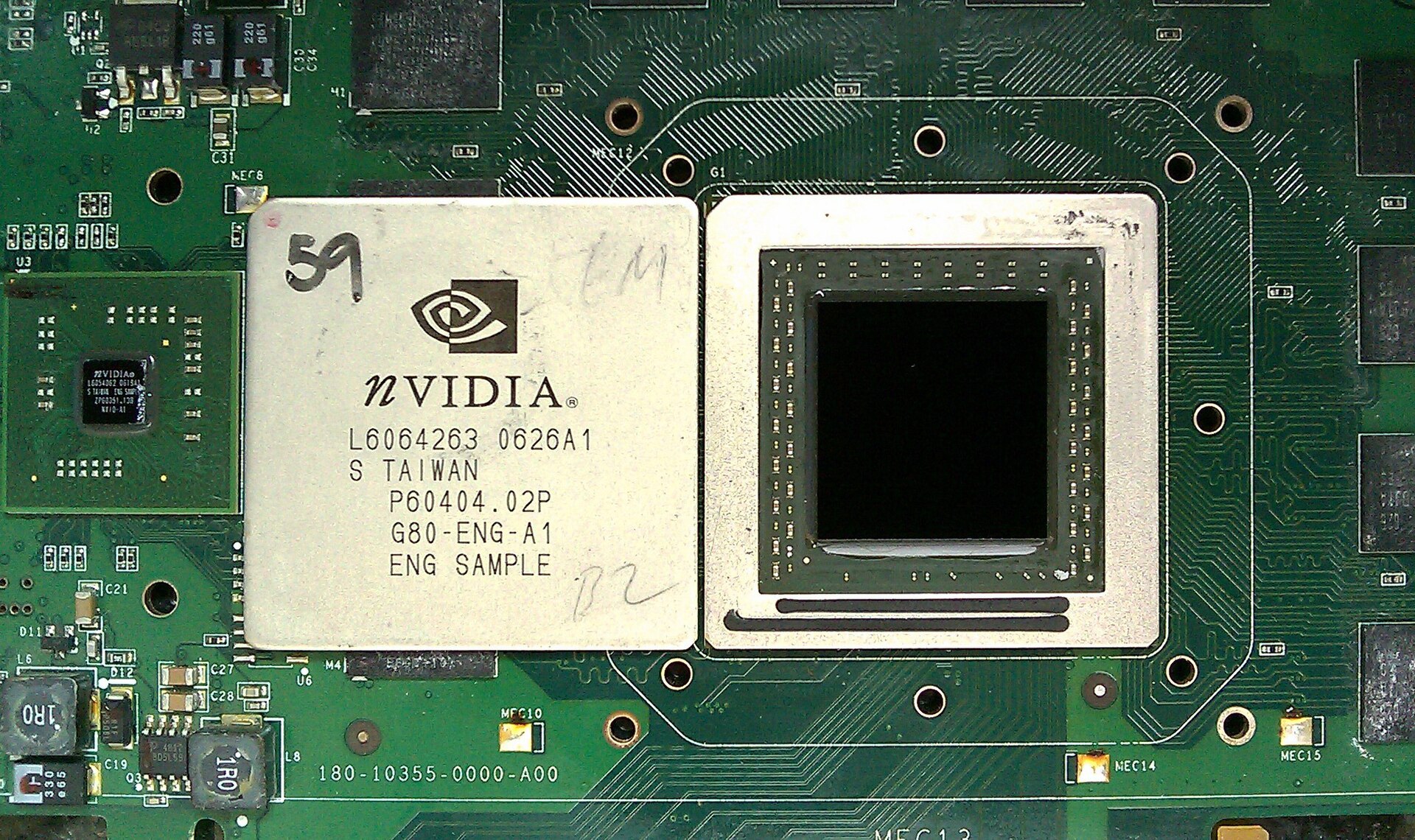
Photograph: Hyins / Wikimedia Commons, public domain. Original photograph, attribution and reuse terms. Photograph of a genuine historical NVIDIA G80 processor core; illustrative archival chip, not evidence connected to any investigation.
 AI / WORLD TECHNOLOGYIs China Ahead in Tech?
 GAMING / NVIDIAWhat NVIDIA’s Shakeup Means for Gamers
 INFRASTRUCTURE / AVIATIONWhat Really Shut Down U.S. Flights: The FAA’s November 13 Network Failure