Picture two identical clocks: one on Earth’s surface, one much higher up. Even if both work perfectly, they do not tick at precisely the same rate. That is not a glitch. It is a measurable consequence of gravity and spacetime.
Three facts to start with
- Spacetime combines three spatial dimensions with time into a physical framework.
- Measured time dilation occurs because of motion and gravity; satellite navigation accounts for these effects.
- Black holes reveal extreme gravitational behavior, but a black-hole image is not a photograph of a wormhole or a time machine.
What scientists mean by “spacetime”
We often describe where something is using three coordinates and when it occurs using a date and time. Modern physics treats those four coordinates as part of one spacetime description. This is more than a mathematical convenience: observers moving relative to one another can disagree about distances, durations and whether separated events are simultaneous.
An “event” is simply something happening at a place and time—a flash of light, a particle interaction or a spacecraft sending a signal. The structure of spacetime determines which events can influence others and how their measurements compare.
Special relativity: moving clocks differ
Einstein’s special theory of relativity says that the speed of light in vacuum is the same for every inertial observer, while measured time intervals and lengths can depend on motion. At everyday speeds these differences are tiny; at speeds close to light, time dilation becomes dramatic.
Two observers can each measure their own local clock ticking normally while comparing a pair of clocks along different paths and finding different elapsed times. No clock has broken; the clocks have traveled through spacetime differently.
General relativity: gravity is not just a force
General relativity describes mass and energy as affecting spacetime geometry. Matter and light then follow paths determined by that geometry. This predicts the bending of starlight, gravitational redshift, orbital effects and gravitational waves.
The rubber-sheet image is a useful classroom metaphor but can mislead: gravity is not literally a heavy bowling ball sinking into an external surface. Spacetime is four-dimensional and the theory predicts measured outcomes without requiring a physical sheet beneath the universe.
Why a clock higher up runs differently
A clock closer to a massive object is affected by a stronger gravitational potential and can accumulate less time than a clock farther away, when carefully compared. That statement depends on how the clocks are positioned and their motions, but the effect is real and tested.
GPS satellites combine motion-based and gravity-based clock effects. Engineers correct their timekeeping so location estimates do not drift. This is one reason relativity is not just an abstract lecture—it operates in technology used every day.
Black holes are not gateways
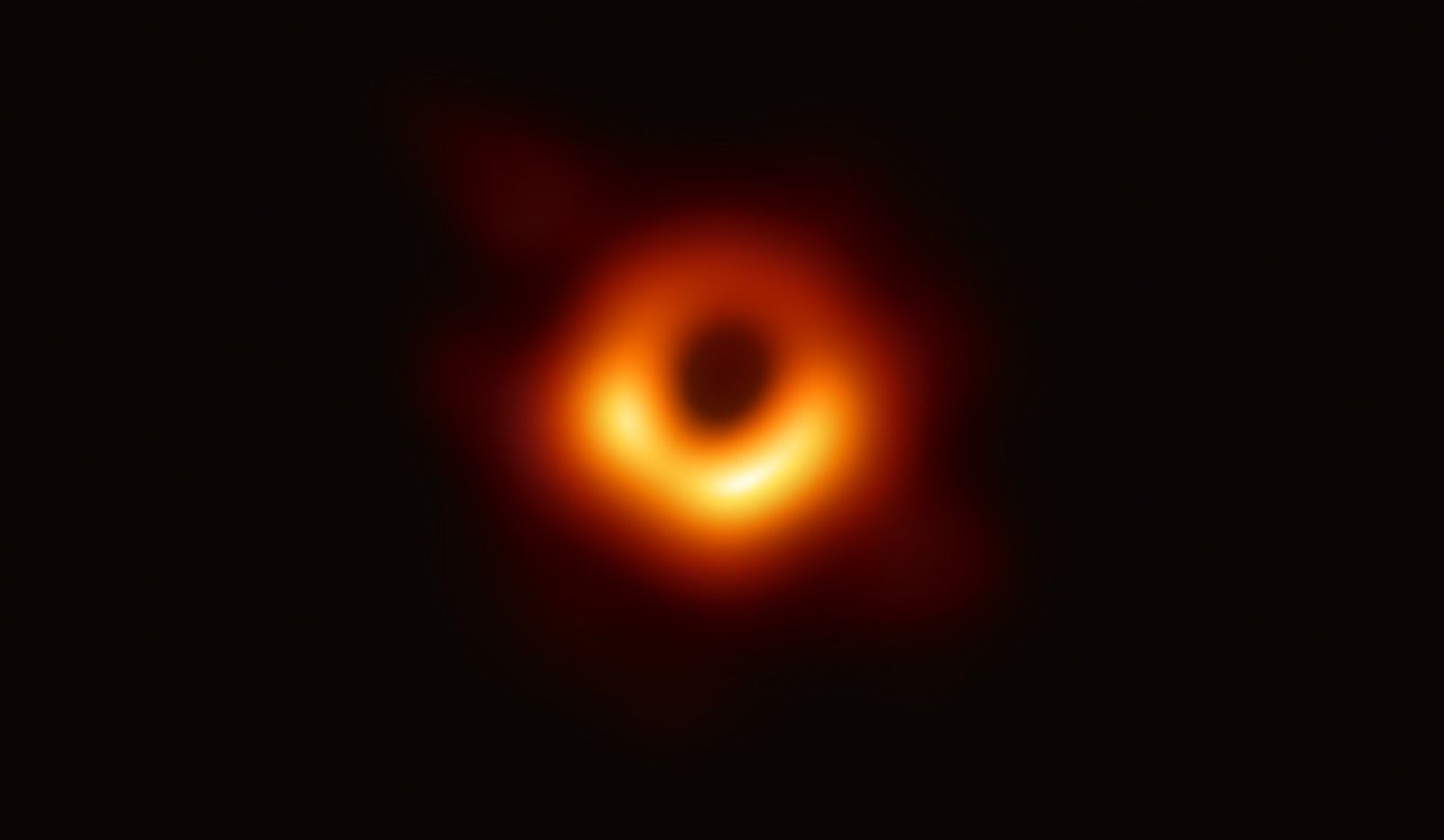
A black hole is an object whose gravity is strong enough that inside its event horizon light cannot escape to distant observers. The Event Horizon Telescope reconstructed an image of bright gas around the enormous black hole in galaxy M87 in 2019.
The observation is a profound test of extreme gravitational environments. It does not reveal a portal, prove traversable wormholes or make time travel to the past possible. Those ideas have very different evidentiary status.
What remains unknown
General relativity works extraordinarily well at large scales. Quantum physics works extraordinarily well for microscopic systems. A complete tested account of quantum gravity that unifies them remains an open research problem.
The deepest questions—what happens at a singularity, whether spacetime is fundamental or emergent, and how gravity behaves at the quantum scale—are questions for experiments, observation and mathematics. They are not discoveries just because a simulation looks convincing.
Primary sources & research
This independent SJK explainer uses public scientific observations and research. Evidence can evolve; follow the linked research agencies for updated findings.
Cover: Event Horizon Telescope Collaboration; first image of M87* (2019), hosted by NASA. Image source / archive. An actual spacecraft or telescope image is not a photograph of a future event.