
Taiwan’s place in the global chip industry is bigger than a single fab announcement. Nanya Technology says it is installing equipment for its new Fab 5A in early 2027 and plans to scale output through the end of the decade. That is a meaningful response to tight DRAM supply, but fabs cannot be switched on like retail warehouses. For gamers and PC buyers, the timelines matter as much as the investment headlines.
What readers should know
- Nanya reported third-quarter 2026 average DRAM selling prices more than 60 percent higher quarter over quarter; that is its own selling-price metric, not an across-the-board consumer retail increase.
- Nanya says Fab 5A equipment move-in starts in the first quarter of 2027, with 30,000 monthly wafer starts targeted by the end of 2028.
- Its October release projects 50,000 monthly wafer starts by the end of 2030, subject to execution, qualification and market conditions.
Who Nanya is—and why it matters
Nanya is one of Taiwan’s major DRAM manufacturers. It is not the same company as Taiwan Semiconductor Manufacturing Company (TSMC), whose foundry operations play a separate role making many advanced logic chips for global customers. DRAM stores working memory in PCs, servers and many embedded devices; dedicated high-bandwidth memory used with AI accelerators is a related but distinct segment.
Nanya’s October 12 investor release says AI infrastructure-related products already account for more than 20 percent of its revenue. Demand stretches beyond AI accelerators to server systems, networking, storage and supporting equipment. This broadens the market pressure on memory production.
The actual Fab 5A timeline
In October, Nanya said equipment will begin moving into its 5A fab in the first quarter of 2027. The company expects output to reach 30,000 wafer starts per month by the end of 2028 and up to 50,000 by the end of 2030.
These figures are company targets, not current production totals or guaranteed deliveries to consumers. Wafer starts must pass through fabrication, yields, testing, packaging, qualification and customer contracts. A ramp announced in 2026 does not cure shortages in the same shopping season.
Legacy DDR4 and new DDR5 both need attention
An October report from Taiwan’s Central News Agency says Nanya plans continued DDR4 business while DDR5 contributed roughly one tenth of sales at the time. That does not mean DDR5 is obsolete. It illustrates the difference between a manufacturer’s customer mix and the dominant memory generation in newly built enthusiast PCs.
It also explains why retiring old memory capacity too quickly can matter to industrial machines, older desktop systems and repair businesses. Supply reallocation can affect multiple generations in different ways.
Could Taiwan become the market’s pressure valve?
Additional memory supply can eventually ease constraints if successful capacity arrives faster than demand expands. But AI data-center purchasing, long-term contracts, yields, power and water constraints, geopolitics, and customer qualifications all affect who gets capacity first.
Nanya says many customers want longer purchasing agreements. That can reduce uncertainty for manufacturers and large buyers while leaving smaller consumer channels exposed to swings. It would be a mistake to forecast a precise RAM price in 2028 from the 2026 fab budget alone.
A PC buyer’s useful takeaway
For a home or small-business purchase today, watch retail prices for the exact DDR4 or DDR5 module and SSD you need, not an aggregate commodity indicator. Buy for compatibility and actual workload demands; avoid treating an announcement about future wafers as an immediate discount.
The bigger editorial story is that Taiwan is expanding its role in a memory supply chain shaped by both AI investment and legacy hardware demand. That opportunity comes with engineering timelines—not a promise of cheaper parts next week.
Editorial method: Current findings are attributed to the sources below. A preliminary explanation is not a final investigative conclusion; projections, allegations and buying advice are explicitly distinguished from established events.
Sources & further reading
Reporting as of November 15, 2026. Source statements, industry forecasts and independent analysis are distinguished in the article. Photo credits are below.
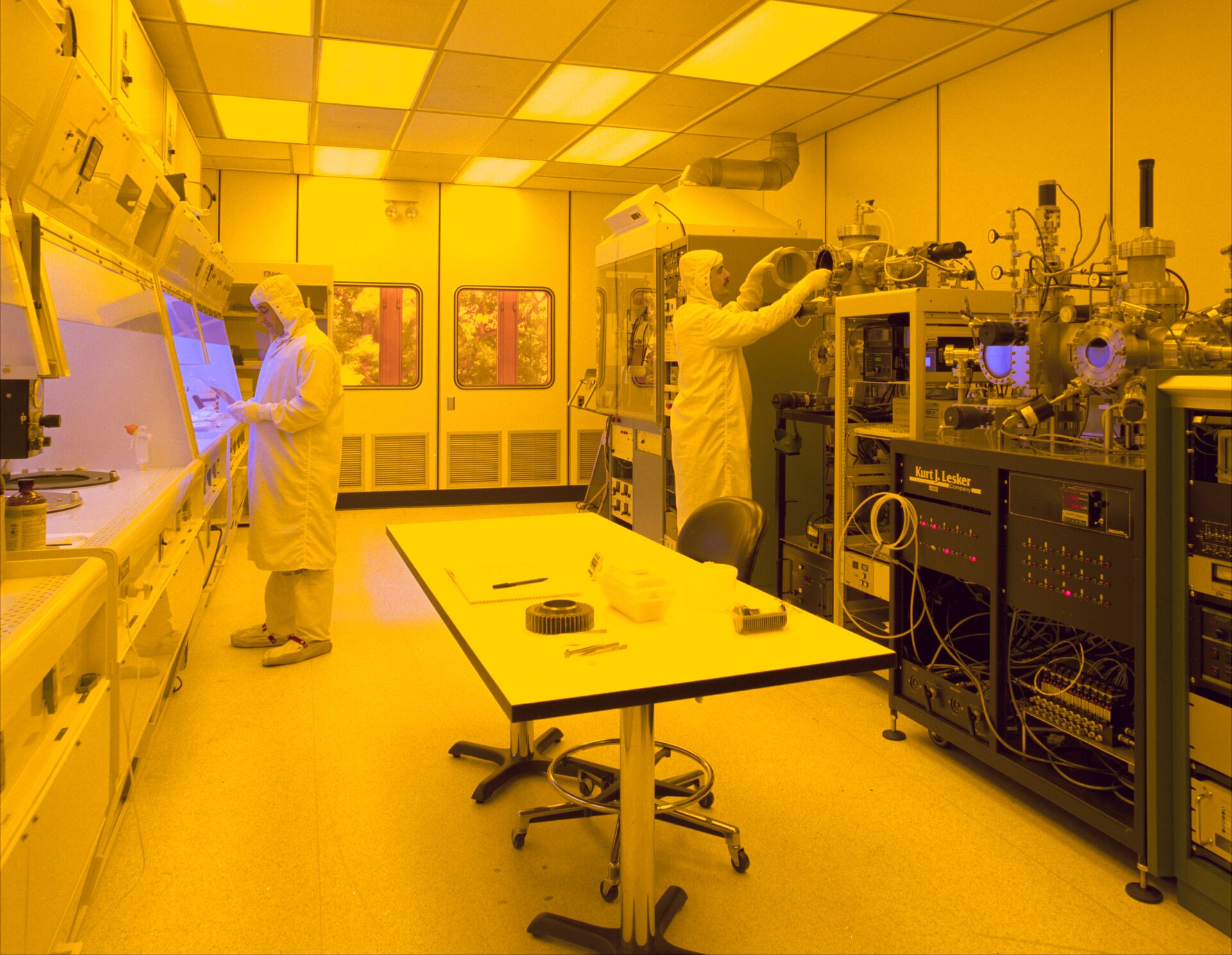
Photograph: NASA Glenn Research Center, archival semiconductor manufacturing photo; public domain. Original photograph, attribution and reuse terms. Genuine cleanroom workers in a NASA semiconductor research facility; not a photograph of Nanya Technology or Fab 5A.
 BUILD LAB / BUYING GUIDEAnother RAM or SSD Price Hike? A Smarter Buying Plan for 2027.
 AI / WORLD TECHNOLOGYIs China Ahead in Tech?
 INFRASTRUCTURE / AVIATIONWhat Really Shut Down U.S. Flights: The FAA’s November 13 Network Failure