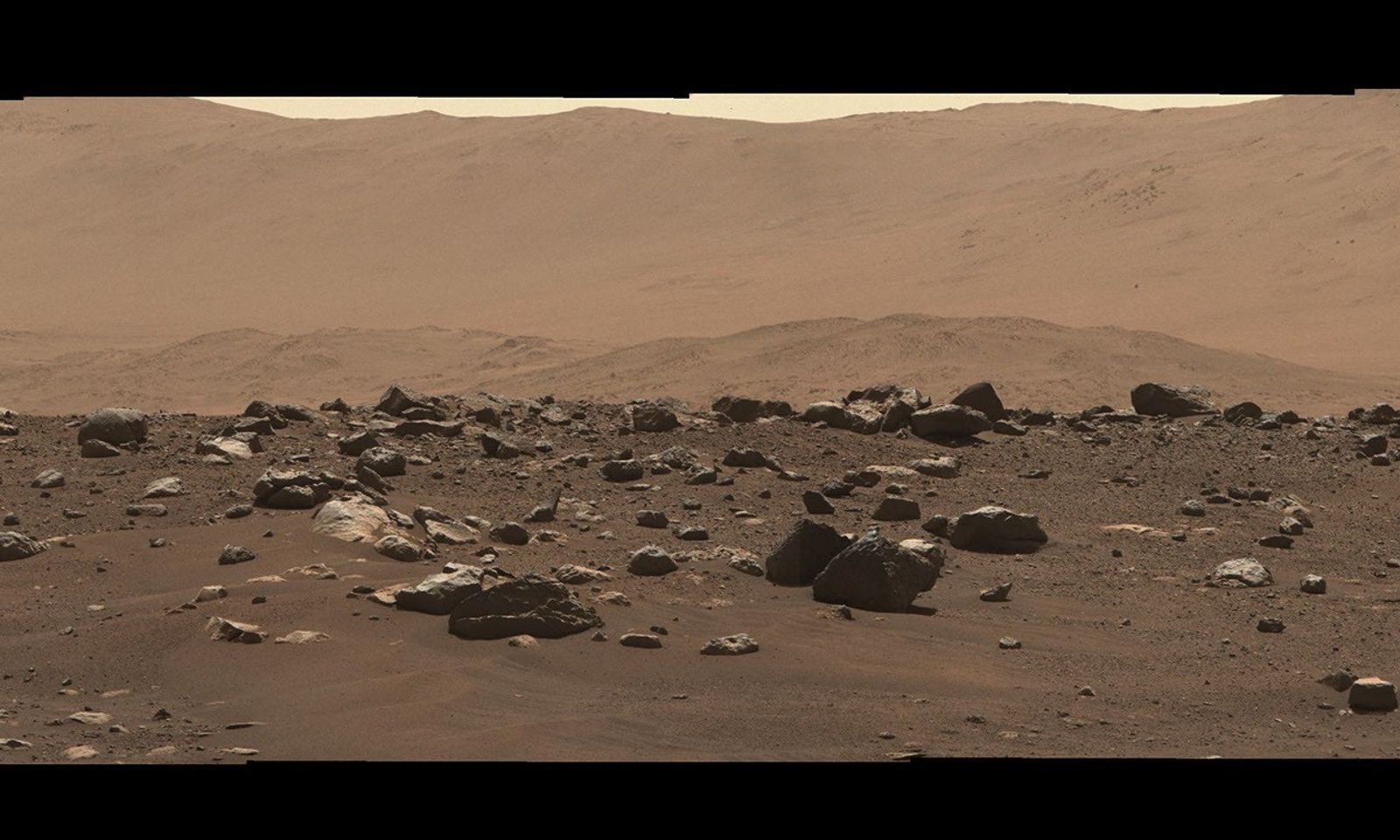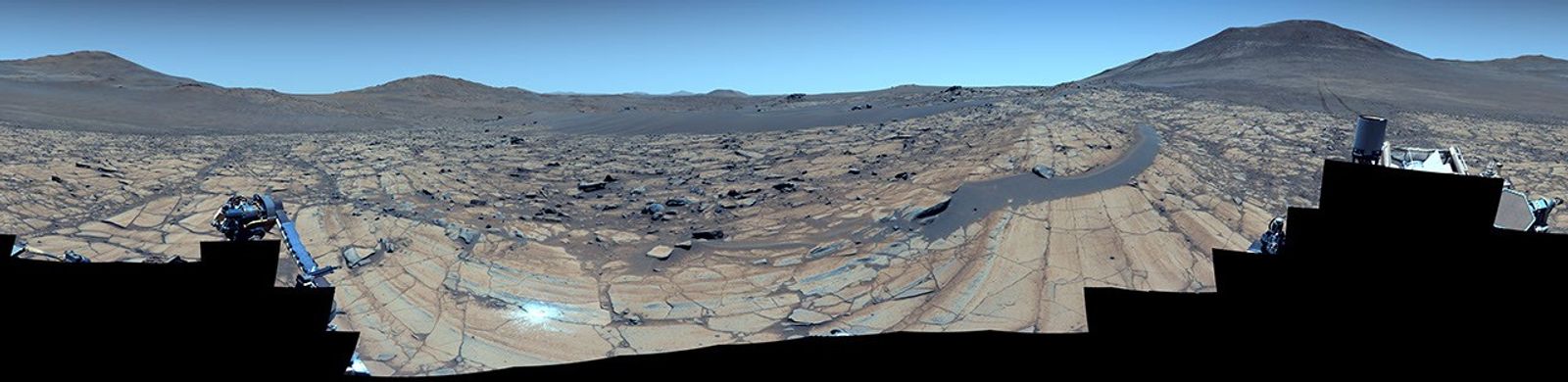
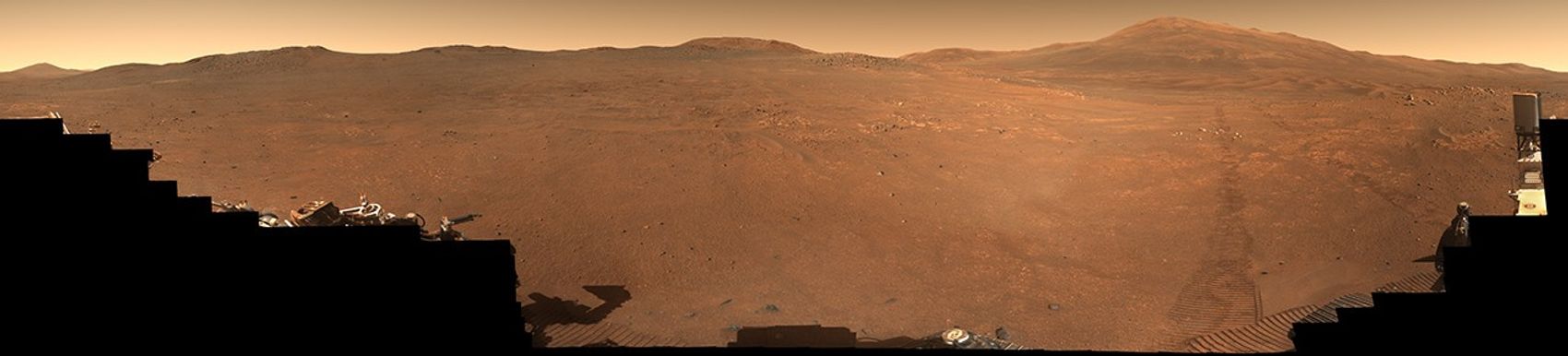
If you could travel to Mars in the year 2126, do not expect glass domes set beneath a blue sky. The most scientifically defensible picture begins with a cold desert, a thin carbon-dioxide atmosphere, and human technology struggling to create small islands of habitable space.
Three facts to start with
- NASA records Mars as a cold desert with a thin atmosphere; the surface is not safely breathable.
- MOXIE converted Martian atmospheric CO₂ into oxygen 16 times, proving a useful principle—not a city-scale life-support system.
- A 2126 outpost is a conditional engineering scenario, not a launch schedule or a population forecast.
Start with the real surface—not movie Mars
Mars is about 0.53 Earth radii, has surface gravity roughly 38% of Earth’s, and is extraordinarily dry and cold by ordinary human standards. Its carbon-dioxide-rich atmosphere is less than one percent of Earth’s surface pressure. Exposed humans would need pressure suits, respiratory protection and radiation shielding, even on an otherwise calm day.
A Martian day is close to 24 hours and 39 minutes, which makes the daily rhythm less alien than Mercury’s or Venus’s. But the biological effects of living for years under low gravity are not established. A future resident would have to work within that uncertainty instead of treating 0.38 g as a harmless change of scenery.
What a credible 2126 settlement might contain
A small, research-oriented base could plausibly have pressurized sleeping and working modules, water recycling, sterilized science laboratories, growing chambers, radiation-shielded shelters and a landing zone physically isolated from living quarters. Much of the built environment might sit behind berms of local material rather than transparent windows.
A mature site would need spare parts, medical capability, reliable power, dust control, communications, autonomy during delays with Earth, and a plan for failures that cannot wait months for rescue. Those details sound less glamorous than a cityscape but matter more than its skyline.
Air, water and power will set the limit
The Mars Oxygen In-Situ Resource Utilization Experiment, MOXIE, rode aboard NASA’s Perseverance rover and demonstrated oxygen production from carbon dioxide. Its 16 runs generated a combined 122 grams of oxygen—an outstanding proof of concept, and far from the output required for an occupied settlement.
Scaling the principle would require industrial-size equipment, storage, maintenance and dependable electricity. Water ice is known on Mars, but obtaining usable water requires mining, purification and protecting reservoirs from contamination. Long dust storms can complicate solar power; NASA identifies fission power as one possible part of the answer.
What will probably not change by 2126
Mars is not expected to develop an Earth-like atmosphere on its own over the next century. A NASA-sponsored study found too little readily accessible carbon dioxide for terraforming using present-day technology. Even a successful base would remain an artificial life-support environment enclosed within a naturally hostile planet.
This distinction matters because living on Mars and making Mars like Earth are different ambitions. It may be possible to solve one locally without coming close to the other globally.
Three grounded outcomes—and why none is assured
Robotic Mars: more capable orbiters, sample analysis, automated construction experiments and occasional cargo demonstrations, but no people permanently resident. That remains a plausible future if cost, risk or priorities block expansion.
Scientific foothold: periodic human crews supported by robotic infrastructure and shipments from Earth. A station might operate for years while still depending heavily on Earth.
Partially self-supplying outpost: a much more demanding possibility in which locally derived oxygen, water and some materials reduce the import burden. It would still need complex replacements and a reliable chain of engineering support; this is a scenario, not an evidence-based headcount.
The question a century cannot answer yet
We do not know whether humanity will invest in continuous Mars habitation, how protected crews would fare for decades, how the first settlement would be governed, or whether using Mars as a living planet would conflict with the search for native microbial life.
The honest 2126 forecast is conditional: sustained success depends on radiation protection, closed-loop life support, cargo economics, international policy and repeated safety demonstrations. Progress in any one area is not a promise that the whole chain will work.
Primary sources & research
This independent SJK explainer uses public scientific observations and research. Evidence can evolve; follow the linked research agencies for updated findings.
Cover: NASA/JPL-Caltech/ASU/MSSS; Perseverance Mastcam-Z panorama, 2025–2026 (archival). Image source / archive. An actual spacecraft or telescope image is not a photograph of a future event.